 The Phoenix Group® Homepage
Introduction
Can a single smart camera monitor traffic, detect crime, enforce road safety, and save lives—all without a human operator on-site? In today’s fast-growing cities, smart cameras are transforming urban safety and efficiency, working around the clock as silent sentinels to keep people and infrastructure protected.
Urban populations are rising, putting mounting pressure on city authorities to manage intricate traffic networks, ensure law and order, and deliver timely services. Traditional surveillance systems, while helpful, often fail in terms of scale, accuracy, and responsiveness. This is where smart cameras—equipped with artificial intelligence (AI), machine learning (ML), and real-time analytics—offer a game-changing proactive approach to city management.
In this article, discover how smart cameras are reshaping urban spaces by reducing risk, increasing operational visibility, and enabling faster, smarter decisions.
What Are Smart Cameras?
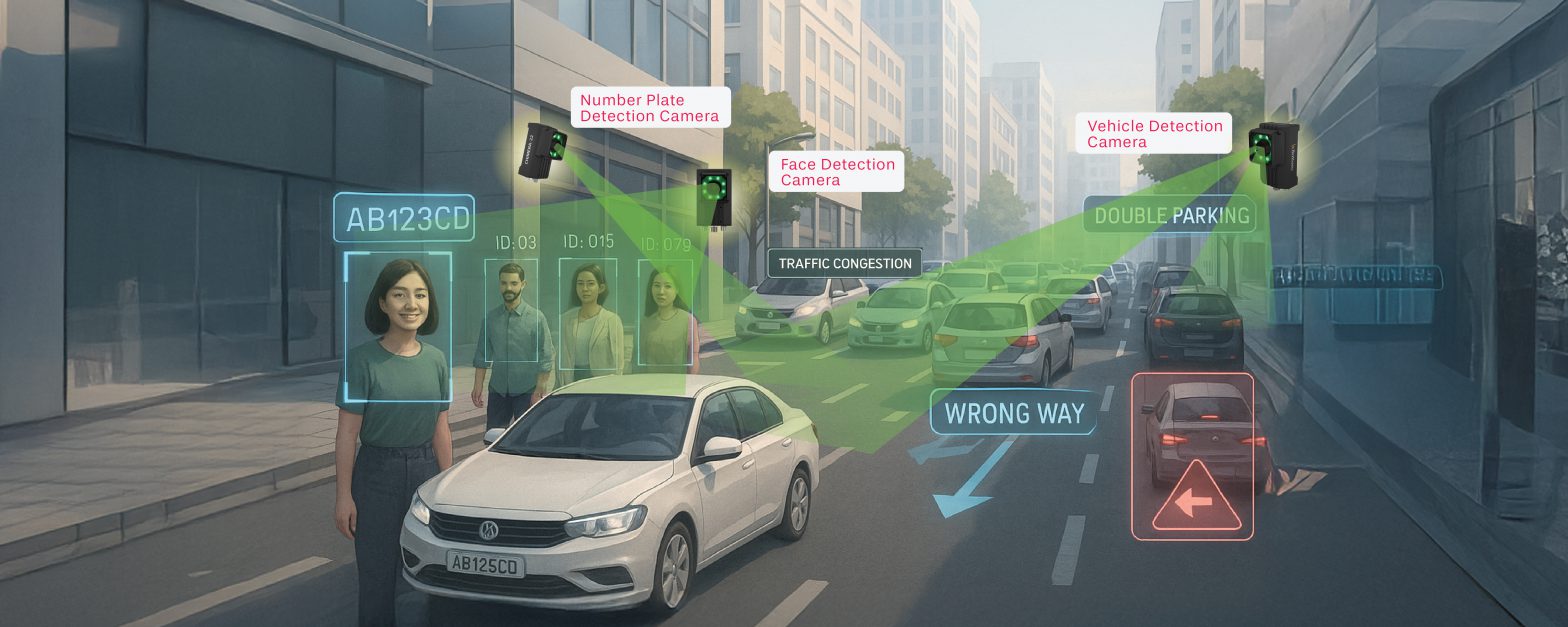
Smart cameras are modern surveillance devices combining high-resolution video, on-board image processing, and AI. Unlike conventional CCTV, which relies on manual review after-the-fact, smart cameras autonomously analyze video in real time. They identify vehicles, recognize faces or license plates, detect suspicious activities, and generate instant alerts—often without human oversight.
These versatile devices support a wide range of urban needs, from traffic control and public safety to infrastructure monitoring. Their real-time intelligence transforms passive recording into active urban management.
Why Smart Cameras Are Essential in Cities
- Urbanization Trends: Over 4.4 billion people (more than half the world) already live in cities. By 2050, nearly 7 in 10 people will be urban dwellers.
- Evolving Challenges: Crime, congestion, and demands for instant services are growing.
- Traditional Surveillance Shortcomings: Old systems are reactive, require intensive human monitoring, and struggle to scale with urban complexity.
- Smart Cameras Provide: Instant analysis, anomaly detection, and actionable insights, supporting quicker, more transparent government responses.
Historical Evolution
- Mid-20th Century: Analog CCTV deployed for basic deterrence and evidence gathering.
- 2000s: Digital, Internet Protocol (IP) cameras allow remote access and better scalability but still lack proactive intelligence.
- 2010s–Today: AI, IoT, and edge computing turn cameras into intelligent, networked devices that interpret their environments and feed city-wide command systems.
Market Growth and Adoption
- Smart Surveillance Market: In 2025, the global video surveillance market is valued at approximately USD 59.6 billion and is projected to reach USD 234.1 billion by 2034, with an expected CAGR of around 16.5%1.
- Asia Pacific Leadership: The region, notably China and India, leads adoption and innovation in smart surveillance systems1.
- Drivers
- Smart city investments globally
- Public safety concerns and crime prevention
- Traffic and mobility management
- Environmental monitoring and resource management
Major industry leaders—such as Hikvision, Dahua, Axis Communications, Bosch, and Honeywell—are investing heavily in advanced systems, with cities like Singapore, Amsterdam, San Diego, and Dubai setting benchmarks for real-world smart camera deployments.
Key Shortcomings of Traditional Surveillance
- Manual Monitoring: Human operators fatigued, accuracy drops drastically after 20 minutes of continuous watching.
- Delayed Response: Reactive systems analyze footage only after incidents occur
- No Automated Analytics: Old cameras can’t distinguish or recognize objects/events; all analysis is post-event.
- Data Overload: Too much footage to review effectively, causing missed incidents and inefficiency.
- Limited Accountability: Footage may lack clarity or be incomplete, undermining public trust and transparency.
Smart Cameras: Capabilities and Technologies
- Object and Activity Recognition: Using deep learning, smart cameras classify vehicles, pedestrians, and activities—flagging anomalies instantly.
- Automatic Number Plate Recognition (ANPR): Enables automated enforcement of traffic rules.
- Facial Recognition: Identifies persons of interest (where legally permitted), enhancing security and emergency interventions.
- Edge Computing: Processing data locally decreases latency, minimizes bandwidth and storage costs, and ensures resilience even if network connectivity fails.
Strategic Applications
- Traffic Management: Adaptive signal control, real-time incident detection, and automated traffic violation enforcement.
- Public Safety: Continuous monitoring of public areas, crowd analytics, and instant alerting.
- Critical Infrastructure: 24/7 surveillance of power grids, water plants, and transit facilities, with early warning for equipment faults.
- Public Transport: Monitoring passenger flow, reducing overcrowding, and supporting rapid emergency response.
Bit Mapper Smart Camera: Product Highlights
| Feature | Bit Mapper Smart Camera |
| Imaging Capabilities | HD video, day/night |
| AI/Edge Analytics | Real-time threat, object, and anomaly detection |
| Industry Alignment | Designed for traffic, transport, defense, and industrial/urban use |
| Ruggedization | Engineered for harsh and challenging environments |
| Customization | Solutions tailored for municipal, enterprise, and defense needs |
Integration Example: Bit Mapper’s smart camera solutions are already supporting traffic management, defense, and industrial applications globally—demonstrating adaptability across urban and specialized sectors.
Future Trends and Bit Mapper’s Roadmap
- 5G and Cloud Analytics: Ultra-fast connectivity and cloud integration enable larger-scale deployments and advanced AI processing.
- TinyML and Low-Power AI: Emerging in edge devices for sustainable, energy-efficient deployments.
- Interoperability: Bit Mapper supports open APIs for seamless integration into smart city platforms and IoT ecosystems.
Real-World Use Cases
- Barcelona: Smart cameras and ANPR reduce congestion, automate emission-based zone enforcement, and enhance emergency response.
- Singapore: AI-enabled cameras across highways and neighborhoods flag traffic and public order issues, consolidating feeds for smart city operations.
- New York City: MTA uses cameras for passenger safety, incident detection, and predictive maintenance on critical infrastructure.
- Tokyo & Surat: From managing Olympic crowds to India’s smart city hubs, intelligent video analytics are improving mobility and reducing response times.
- Dubai: The “Oyoon” project integrates thousands of AI cameras citywide, achieving real-time threat detection and rapid law enforcement coordination.
Best Practices for Deployment
- Site Assessment and Selection: Deploy at high-risk, high-traffic, or vulnerable sites for maximum impact.
- Central Integration: Link all cameras to unified city command centers.
- Compliance: Adopt strong privacy, security, and data retention policies.
- Training: Equip operators with skills in AI alert verification and response.
- Public Engagement: Inform citizens, seek feedback, and maintain open communication.
Common Myths and FAQ
- Myth: “Smart Cameras = Mass Surveillance”
Reality: Most systems focus on automated object/event detection, not tracking individuals. - FAQ: Are smart camera solutions too expensive for small cities?
No: Modular, scalable options allow for phased rollouts and long-term ROI through operational savings. - FAQ: Do they infringe privacy?
**No, if deployed with compliance and anonymization protocols.
Conclusion
Smart cameras are pivotal to the digital transformation of cities—providing real-time intelligence, proactive threat detection, and operational efficiency. With proven benefits in safety, mobility, and resource management, their deployment signals a shift to smarter, safer, and more responsive urban environments.
Adoption succeeds when paired with robust privacy and ethical frameworks, transparent governance, and strong stakeholder engagement. As you plan your next urban or industrial project, consider how Bit Mapper’s smart camera solutions can help build resilient, future-ready infrastructure.